Korean Bibimbap
Highlighted under: World Collection
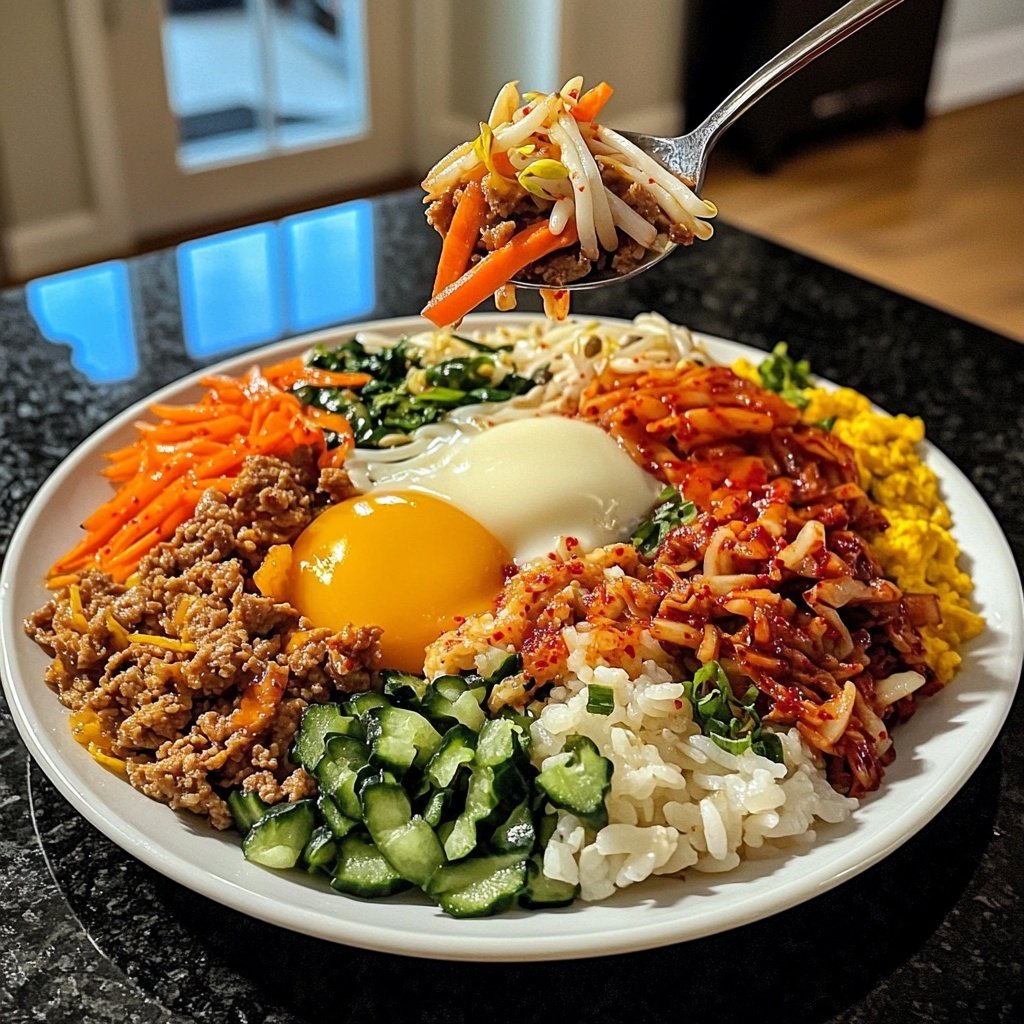
Korean Bibimbap is a vibrant and delicious mixed rice dish topped with an array of colorful vegetables, meat, and a fried egg, all drizzled with spicy Gochujang sauce.

Korean Bibimbap is not just a meal; it’s a celebration of flavors and colors on your plate. Originating from Korea, this dish has become popular worldwide for its satisfying combination of ingredients and the health benefits of fresh vegetables.
Why You Will Love This Recipe
- A wonderful balance of flavors and textures in every bite
- Customizable with your choice of proteins and vegetables
- A visually stunning dish that impresses at any dinner table
The Essence of Bibimbap
Bibimbap, a cornerstone of Korean cuisine, translates to 'mixed rice.' This dish beautifully combines an array of ingredients, making it not only a feast for the palate but also for the eyes. The vibrant colors of the vegetables, the rich texture of the meat or tofu, and the runny egg yolk all come together to create a harmonious dish. Each component contributes unique flavors and nutritional benefits, making bibimbap a wholesome choice for any meal.
Historically, bibimbap was a way for farmers to use up leftover vegetables and meats, showcasing the Korean principle of resourcefulness in cooking. Today, it has evolved into a beloved dish enjoyed worldwide. Whether served in a traditional stone bowl or a simple plate, bibimbap remains a symbol of Korean culinary heritage. Its versatility ensures that everyone can enjoy a version tailored to their taste preferences.
Customizing Your Bibimbap
One of the most delightful aspects of bibimbap is its customizability. You can choose your favorite proteins, such as beef, chicken, tofu, or even seafood, allowing for endless variations. For vegetarians or those looking to reduce meat intake, simply load up on various vegetables, mushrooms, and plant-based proteins. You can also experiment with different sauces beyond Gochujang, such as sesame dressing or spicy kimchi for added flavor.
In addition to the traditional vegetables like spinach and carrots, feel free to incorporate seasonal produce. Ingredients like bell peppers, radishes, or even sweet potatoes can add a new twist to your bibimbap. This adaptability makes it perfect for using up leftovers or whatever you have on hand, ensuring that every bowl can be unique and satisfying.
Serving Suggestions
When it comes to serving bibimbap, presentation matters. Serve the dish in individual bowls for a more personal touch, or create a communal platter where everyone can build their own bowl. Pair your bibimbap with side dishes like kimchi, pickled vegetables, or a light soup to enhance the meal. The combination of flavors and textures will elevate your dining experience.
For those who enjoy a bit of spice, consider adding extra Gochujang or even a sprinkle of chili flakes on top. The balance of heat with the freshness of the vegetables and the richness of the egg will keep your taste buds excited. Don't forget to take a moment to appreciate the visual appeal before diving in—it's a dish meant to be savored!
Ingredients
Ingredients
For the Bibimbap
- 2 cups cooked white rice
- 1 cup sliced mushrooms
- 1 cup shredded carrots
- 1 cup spinach
- 1 cup bean sprouts
- 1 cup zucchini, julienned
- 4 eggs
- 200g ground beef or tofu
- 2 tablespoons soy sauce
- 2 tablespoons sesame oil
- 1 tablespoon Gochujang
- Sesame seeds for garnish
- Green onions for garnish
Enjoy your homemade Korean Bibimbap!
Instructions
Preparation Steps
Prepare the Vegetables
In a pan, heat sesame oil over medium heat. Sauté mushrooms, carrots, spinach, bean sprouts, and zucchini separately until tender. Season each with a pinch of salt. Set aside.
Cook the Protein
In the same pan, cook the ground beef or tofu until browned. Add soy sauce and mix well. Remove from heat.
Fry the Eggs
Fry the eggs sunny-side-up in a separate pan until the whites are set but the yolks are still runny.
Assemble the Bibimbap
In bowls, place a serving of rice at the bottom. Arrange the cooked vegetables and protein on top. Place a fried egg in the center and drizzle with Gochujang. Garnish with sesame seeds and green onions.
Mix everything together before eating for the best flavor!
Pro Tips
- Feel free to customize the vegetables and protein according to your preference. Adding kimchi on the side can enhance the flavor even more.
Tips for Perfect Bibimbap
To achieve the best texture and flavor, it’s essential to cook each vegetable separately. This method allows each ingredient to retain its unique taste and prevents the vegetables from becoming soggy. Sautéing them briefly helps maintain their crunch, which adds to the overall experience of the dish. Don't rush this step—quality matters!
Using a good-quality sesame oil can significantly enhance the dish's flavor. Look for toasted sesame oil, which has a deeper, nuttier flavor. This will infuse your vegetables with a rich aroma, elevating the simplicity of bibimbap to a gourmet level. Additionally, feel free to drizzle a bit of sesame oil over the finished dish for an extra touch of flavor.
Nutritional Benefits
Bibimbap is not just a delicious meal; it's also packed with nutrients. The variety of vegetables provides essential vitamins and minerals, while the protein from meat or tofu contributes to muscle health and satiety. Brown rice can be used as a healthier alternative to white rice, offering more fiber and nutrients, making the dish even more beneficial.
Furthermore, the inclusion of ingredients like spinach and bean sprouts adds antioxidants, which are vital for overall health. With its balanced macronutrients and rich micronutrient profile, bibimbap is an excellent choice whether you’re looking for a hearty meal or a light, nutritious option.
Questions About Recipes
→ Can I make Bibimbap vegetarian?
Absolutely! You can substitute the beef with tofu or tempeh and use only vegetables.
→ What is Gochujang?
Gochujang is a Korean chili paste that adds a spicy and slightly sweet flavor to dishes.
→ Can I prepare the ingredients in advance?
Yes, you can prepare and store the vegetables and protein in the refrigerator a day ahead.
→ What kind of rice should I use?
Short-grain white rice is traditional for Bibimbap, but you can use brown rice or any preferred variety.
Korean Bibimbap
Created by: Elodie March
Recipe Type: World Collection
Skill Level: Intermediate
Final Quantity: 4 servings
What You'll Need
For the Bibimbap
- 2 cups cooked white rice
- 1 cup sliced mushrooms
- 1 cup shredded carrots
- 1 cup spinach
- 1 cup bean sprouts
- 1 cup zucchini, julienned
- 4 eggs
- 200g ground beef or tofu
- 2 tablespoons soy sauce
- 2 tablespoons sesame oil
- 1 tablespoon Gochujang
- Sesame seeds for garnish
- Green onions for garnish
How-To Steps
In a pan, heat sesame oil over medium heat. Sauté mushrooms, carrots, spinach, bean sprouts, and zucchini separately until tender. Season each with a pinch of salt. Set aside.
In the same pan, cook the ground beef or tofu until browned. Add soy sauce and mix well. Remove from heat.
Fry the eggs sunny-side-up in a separate pan until the whites are set but the yolks are still runny.
In bowls, place a serving of rice at the bottom. Arrange the cooked vegetables and protein on top. Place a fried egg in the center and drizzle with Gochujang. Garnish with sesame seeds and green onions.
Extra Tips
- Feel free to customize the vegetables and protein according to your preference. Adding kimchi on the side can enhance the flavor even more.
Nutritional Breakdown (Per Serving)
- Calories: 550 kcal
- Total Fat: 24g
- Saturated Fat: 6g
- Cholesterol: 210mg
- Sodium: 600mg
- Total Carbohydrates: 65g
- Dietary Fiber: 5g
- Sugars: 4g
- Protein: 20g